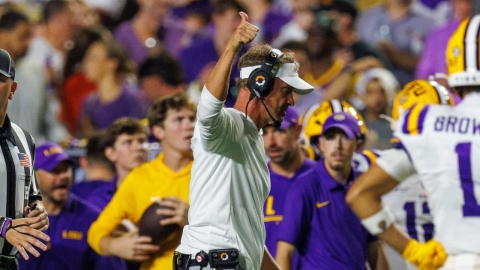
HANAGRIFF: You Can Go Home Again — But Lane Kiffin Knows What Awaits in Oxford
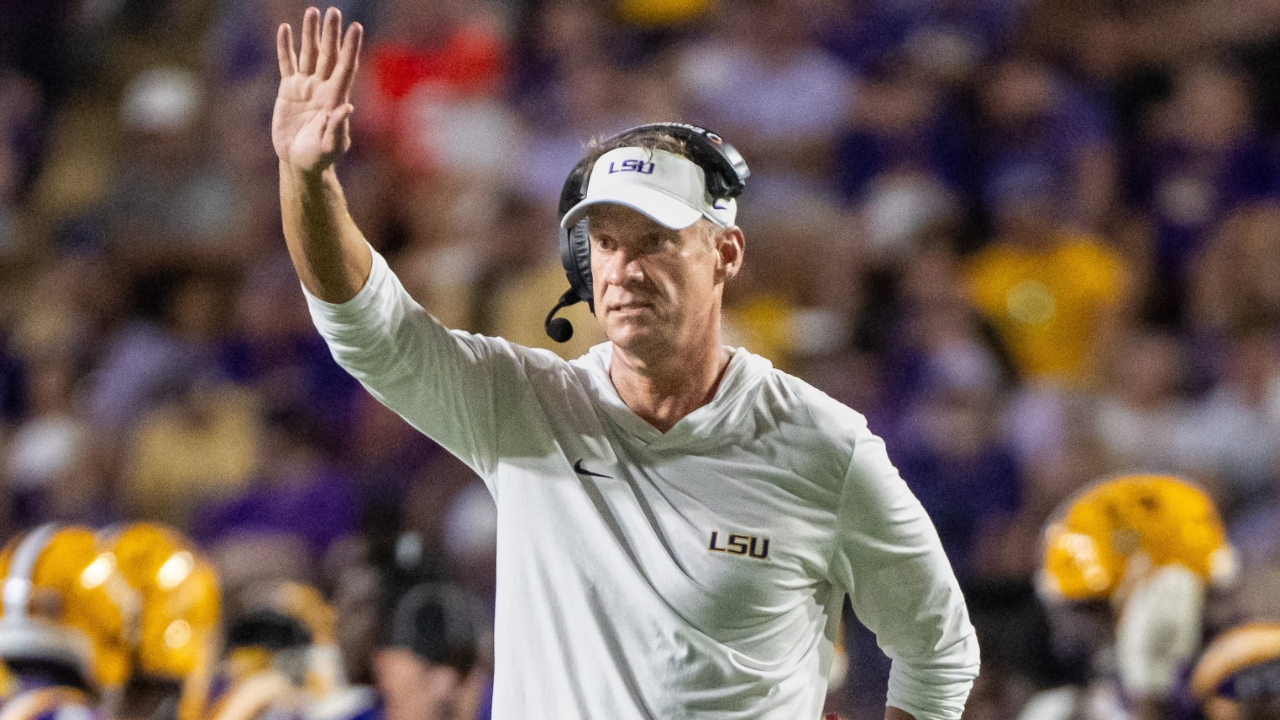
Back Home...Again
Thomas Wolfe’s famous novel, “You Can’t Go Home Again”, chronicles the life of a writer that finds scorn back in his hometown upon his return.
Wolfe died in 1938 at the age of 37. Nowhere in his biography does it suggest he was ever even a casual college football fan.
Which is fitting, since coaches and players in the modern day go “home” again all the time...but they find scorn at a level infinitely higher than George Webber, the protagonist of the book.
Going home again is not new to Lane Kiffin, or LSU, or Ole Miss, and that’s before we get to any of the other participants Saturday that have some previous tie to the other school.
For Kiffin, the scorn is nothing new. Southern Cal left him on the airport tarmac. Alabama’s bus left him at the stadium, after winning a National Championship no less.
🔥 Get the inside scoop on LSU football and recruiting — Join TigerBait Premium
In Knoxville, they treated him to a buffet comprised of various mustards and golf balls.
He will not be the first Ole Miss coach to return to Oxford without an invitation to tailgate in the Grove. In 1998, Tommy Tuberville, who had posted three winning seasons out of four, left the Rebels for Auburn, less than a week after proclaiming, “they’ll have to carry me out of here in a pine box.”
When the Tigers came to Oxford two seasons later, there were some Ole Miss fans ready to take him up on the offer.
Auburn won 35-27.
LSU once had a National Championship coach depart for another job, leave that job for yet another, then return to Baton Rouge to face the Tigers.
His name was...Paul Dietzel.
It was over four and a half decades before Nick Saban would make a similar move. At the end of the 1961 season, Dietzel, who had guided LSU to the 1958 National Championship, left Baton Rouge to take the job at Army.
He was the first non-Army graduate to hold the position, and, at the time, Army was considered the better of the two jobs.
After four seasons that included two winning and two losing campaigns, Dietzel left West Point (voluntarily) for the same position at South Carolina.
His first game as coach of the Gamecocks? In Tiger Stadium, where the locals were still steamed at him despite his previous championship.
Any of this sound familiar?
LSU won the game 28-12, and Tiger fans were able to conjure up a significant amount of disdain for Dietzel without even having social media.
Saban’s return to Baton Rouge with Alabama came after a detour in Miami, and one year removed from his comeback to the college game.
In 2007, a Crimson Tide team that would finish 7-6 gave the eventual National Champions all they wanted in Tuscaloosa. Matt Flynn hit Early Doucet for a touchdown on a fourth and four play, and if he had not, there would be one less banner hanging in the football building.
LSU won 41-34.
By 2008, Saban had his house in order, and the Tide finished the regular season 12-0. That included a win in Baton Rouge (fans were NOT happy to see him), but it took overtime for Alabama to overcome the Tigers, who finished that year a pedestrian 8-5.
The underdogs in those two games did not play like it. Do with that what you will.
Back to the present day, LSU and Ole Miss have traded general managers and running back coaches. In all, ten coaches, sixteen support staffers, and six players have traded in red and blue for purple and gold, or vice versa.
It was surprising that no draft choices were included in the transactions.
(Too soon?)
With all of the intel of seasons working together having swapped sides, it begs the question of who gained an edge?
Kiffin suggested it was Pete Golding, because he worked last year as a coordinator. Kiffin himself has been in that position before, and provided some context.
“As a head coach … Saban and I are much more going to tell them what we should play, things that cause us problems, than the coordinator is going to tell the head coach,” Kiffin said. “There's just a lot of familiarity that's probably never happened before when people play the next year, then half the coaches are split.”
Will that intel be beneficial, or a tantalizing trap?
In a 1960’s book, “The Guns of August”, author Barbara Tuchman described the military mistakes made in World War I. The errors came when commanders made decisions based on dated information.
She described how those previous events provided lessons that were no longer valid, because technology and context had changed, and it caused those sides to incur even greater damage.
Lane Kiffin knows what Pete Golding knows, and Golding knows that Kiffin knows what he knows.
The same goes for the players, staffers, and assistant coaches that switched sides in the offseason.
How much of what they did before will they do again? How much will it change?
On what promises to be an all-time raucous day in Oxford, it will be the only chess game going.