LSU basketball has produced its share of outstanding players.
No one can question the top three individuals in this group — Bob Pettit, Pete Maravich and Shaquille O’Neal. All three players have statues outside the basketball facility, which is named after Maravich. All three players were chosen members of the all-time NBA top-50 team. All three players have been enshrined in the Naismith Memorial Hall of Fame.
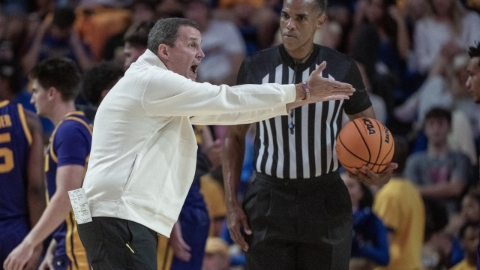
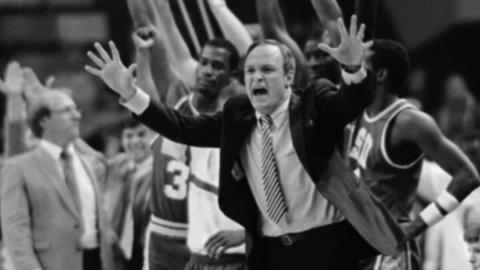
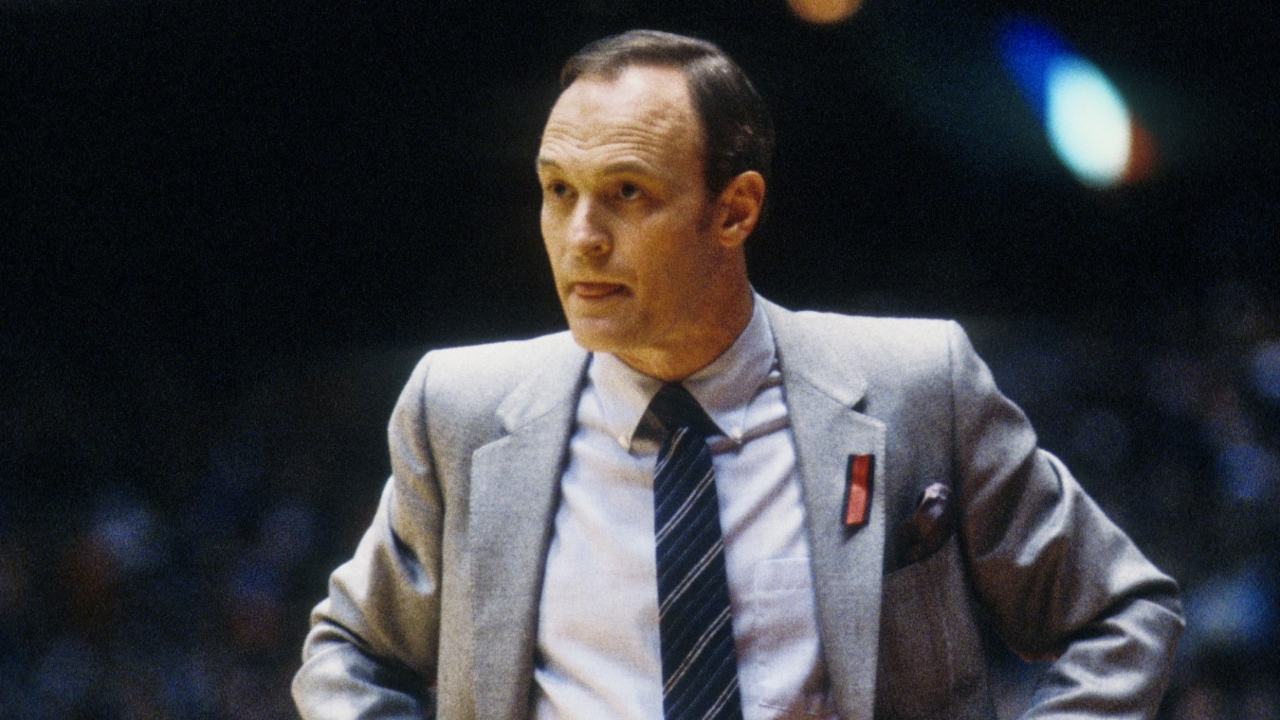
Still, none of those three individuals can surpass what Dale Brown meant to the LSU basketball program. Brown, who won 448 games during his 25-year career at LSU, died Friday at the age of 90. Simply put, Brown put the Tigers on the basketball map.
Yes, Pettit played at LSU years before Brown was hired as the head coach. Yes, Maravich completed his Tigers career just two seasons before Brown took over the program from his dad Press. Yes, O’Neal, who recruited to LSU by Brown, is as prominent name in the world today as any Tigers athlete.
However, Brown’s name is certainly first mentioned when the history of LSU basketball is discussed.
Did Brown have his faults? The answer is absolutely ‘yes.’ Brown was not the greatest of basketball x-and-o coaches. Brown would not keep his opinion to himself. Just recall his many negative comments about the NCAA.
Brown was a master motivator and a master psychologist. He was also a passionate person, who was driven to make LSU basketball a force in a time Kentucky dominated the Southeastern Conference. Brown was also a master entertainer. He desired to make Tigers basketball an event, which he did during his tenure at the school. Everyone knew it was a big game when the Tigers mascot dropped from the catwalk of the PMAC before tipoff.
The Pete Maravich Assembly Center was not known for enthusiastic crowds until Brown became coach. As soon as he was hired, Brown traveled throughout the state of Louisiana handing out purple and gold basketball nets to any household which had a goal in the driveway. Brown’s personality probably developed from the fact that he grew up in a single-parent household raised by his mother. Brown’s father left the family two days before he was born.
Under Brown, the PMAC became known as the “Deaf Dome.” No visiting team enjoyed coming to the Maravich Assembly Center, particularly during a stretch from 1977-1981. In Brown’s first home game as coach in the 1972-73 season, the Tigers upset eventual national runner-up Memphis. State. Five seasons later, LSU upset eventual national champion Kentucky in an overtime game at the PMAC.
Brown’s teams made Final Four appearances in 1981 and 1986. The 1981 team was loaded with talent, led by Rudy Macklin. The 1986 team reached the Final Four on pure grit and determination. That squad knocked off Purdue, Memphis State, Georgia Tech and Kentucky to gain a spot in the national semifinals. That TIgers team, a No. 11 seed, beat the No. 3, No. 2 and No. 1 seeds to advance to the Final Four.
Brown was criticized for never making the Final Four during O’Neal’s three seasons. With O’Neal as his center, LSU lost twice in the second round — Georgia Tech in 1990 and Indiana in 1992 — and once in the first round — Connecticut in 1991.
Brown probably stayed as coach a little too long. His 1993 team advanced to the NCAA tournament where it lost to California in the opening round. Brown’s next four teams all had losing records. Moreover, there were NCAA violations involving Lester Earl. The Tigers were given sanctions which harmed the.program for a couple of seasons after John Brady replaced Brown who retired following the 1996-97 campaign. Earl later admitted that he was pressured by the NCAA during the investigation.
Brown’s final body of work was quite impressive. He took LSU to the NCAA tournament. 13 times. His Tigers teams won four SEC regular-season championships and one SEC tournament title. As previously mentioned, LSU made two Final Four trips. Brown was inducted into the College Basketball Hall of Fame in 2014.
However, it was Brown’s spirit which epitomized LSU basketball. One can only hope the current group of Tigers basketball players will display a similar quality when they play games on a court named in honor of Brown and former women’s basketball coach Sue Gunter. LSU has now seen two coaching giants pass in 2026 in Brown and Skip Bertman. Both men were special for reasons other than victories and championships. Like Bertman, Brown made his impact on LSU.